Pilgrimage to Lourdes

In 1861, a young girl named Bernadette was gathering firewood near a grotto on the outside of the town of Lourdes, France. Over the next few months, she reported seeing an apparition – “a lady in white” over 18 times. On her 15th visit she reported that the Lady in White said “I am the immaculate conception”. After a four-year inquiry by the Catholic Church, it was concluded that the Lady in White was the Virgin Mary, and the Church approved the worship of Our Lady of the Grotto of Lourdes.

Bernadette reported that the Lady instructed her to dig a hole in the ground with her hands and a spring appeared. This spring eventually became the source of over 70 confirmed miraculous healings. She also reported that the Lady asked that a chapel be built on the site. In 1862 the first of three churches – the Crypt – was built.

The word quickly spread throughout Europe and the town was overwhelmed with pilgrims.

Bernadette was in poor health and besieged by the pilgrims. In 1866 she entered the Convent of St. Gildard in Nevers, France. She remained there until her death in 1879.
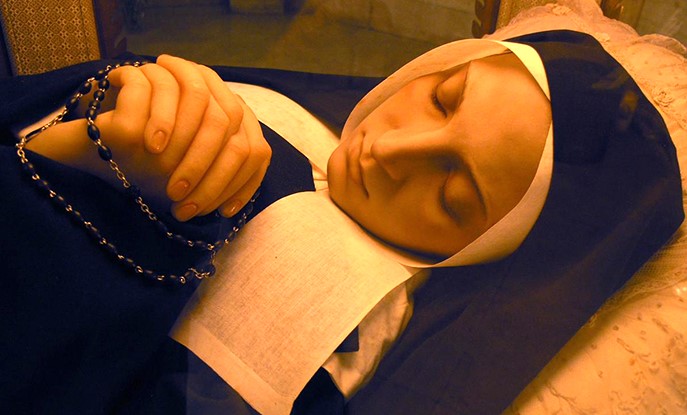
St. Bernadette was canonized in 1933, and her body lies in a glass casket in the chapel of St. Gildard’s Convent in Nevers. When her body was exhumed, it was found intact.
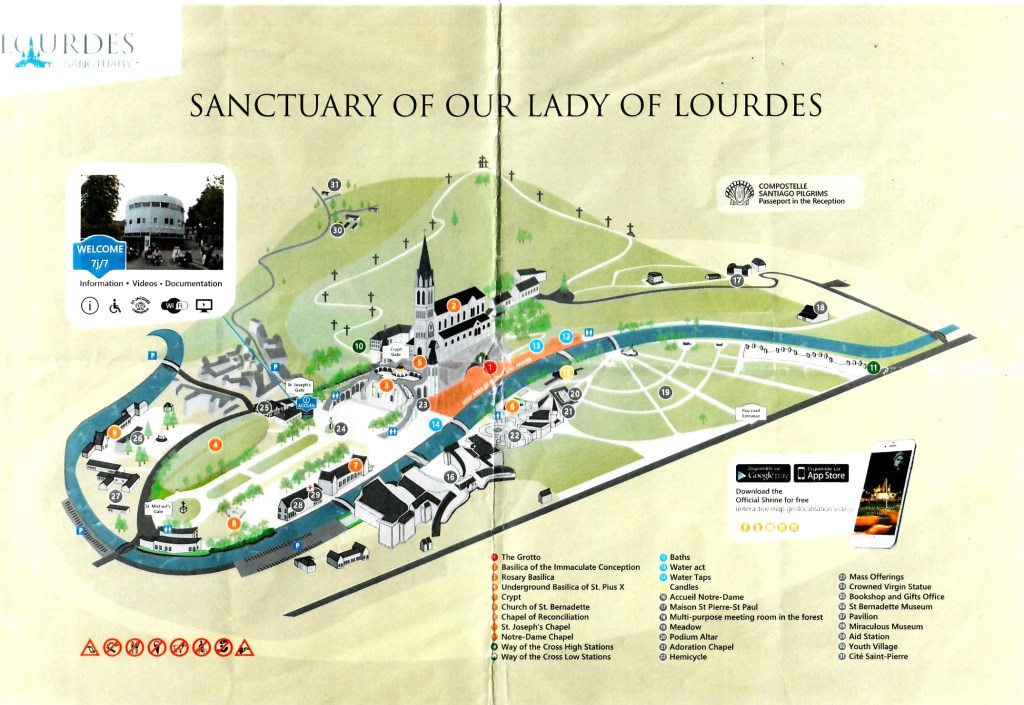
Today the Shrine of Lourdes consists of a site of over 150 acres. It contains the Grotto, the Spring, three churches, a number of support buildings and an underground chapel with a capacity of 25,000.

Four to six million pilgrims visit Lourdes each year. During the busy summer months, the crowds in the city often exceed 25,000 a day. It is estimated that over 200 million pilgrims have visited the Shrine since 1860.

Lourdes is a small town with a population of 15,000. The town and the surrounding area offer over 350 hotels containing about 40,000 beds.

Linda and I visited Lourdes in 2023. We used a French travel agency to book the trip as the hotels are booked solid by tour groups and we were traveling alone. Lourdes is easily reached by train from Paris, but we were in Nice – which required a connection on Air France in Paris and a car service from the Pau Airport to Lourdes.

Arriving in Lourdes we were consumed by the crowds everywhere – many of whom were pushing invalids in wheelchairs or special carts. There is a sense of faith that permeates the air, and it hit me in the chest.
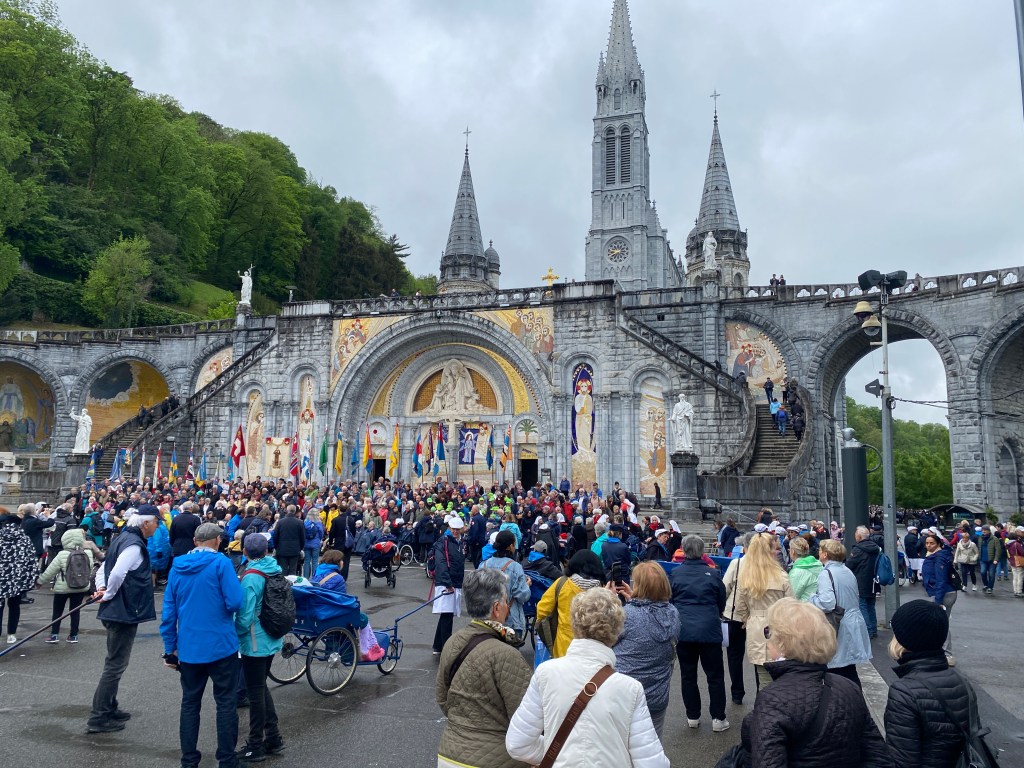
A visit to the Shrine starts with the courtyard in front of the three churches – which are connected and appear to be one building. The arch to the right leads to the Grotto.
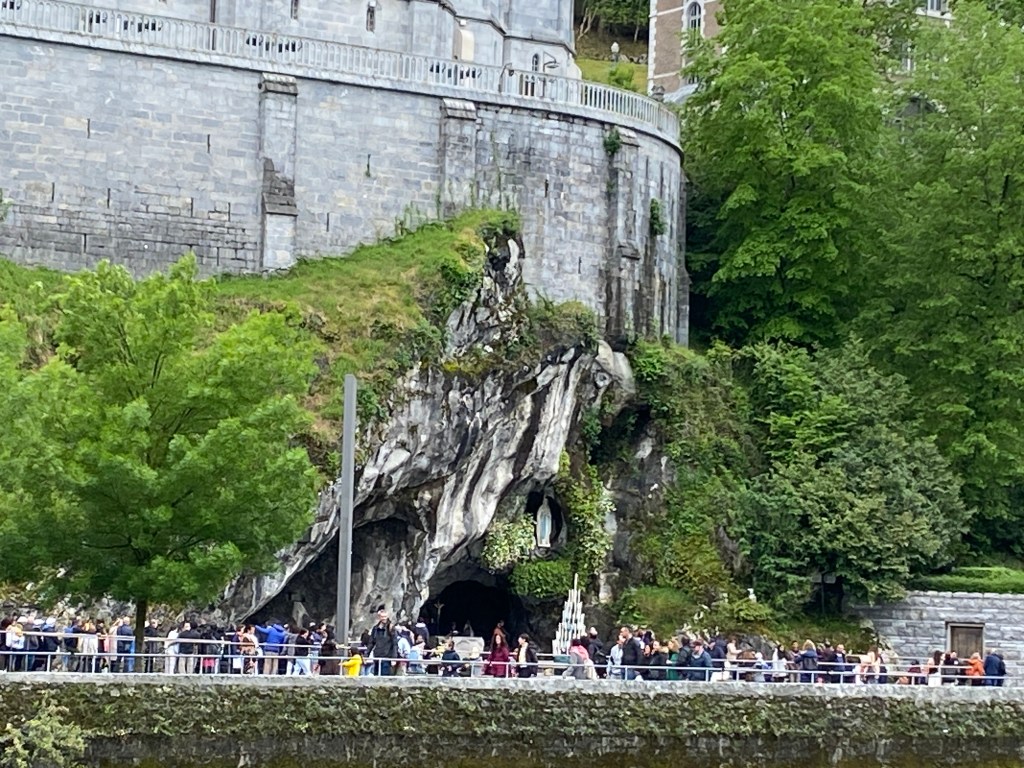
Thousands of pilgrims each day walk through the arch and along the path to the Grotto. It is essentially a cave with the church built on the rock above the cave. Mass is celebrated several times a day in front of the Grotto.
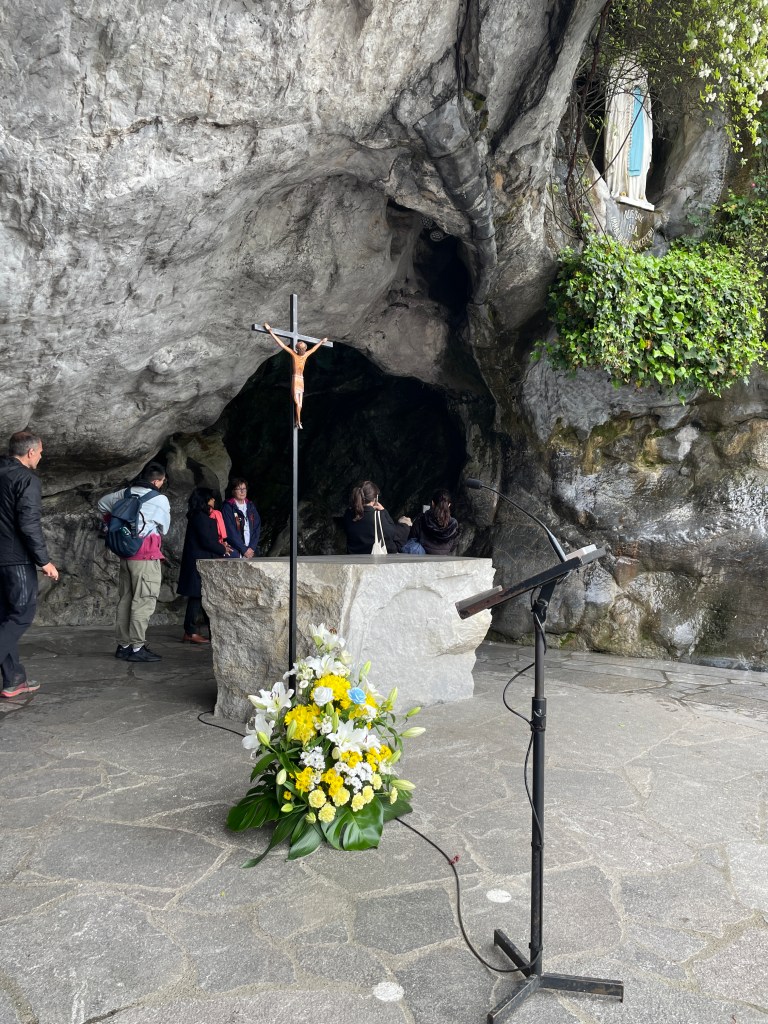
Pilgrims walk single file and touch the walls of the Grotto and observe the statue of the Virgin Mary which is placed in the niche where Bernadette saw the apparition.

The original Spring is encased in glass at the entranced to the Grotto. Water from the Spring is piped and is available to the pilgrims at several locations adjacent to the Grotto. The water is believed to have healing powers and almost all of the pilgrims leave with a vessel filled with the water.

In the afternoon the pilgrims begin to make their way to the Shrine for the evening Candlelight Service. The Church provides special carts for the handicapped and local volunteers – usually dressed in white – push the carts to the service.
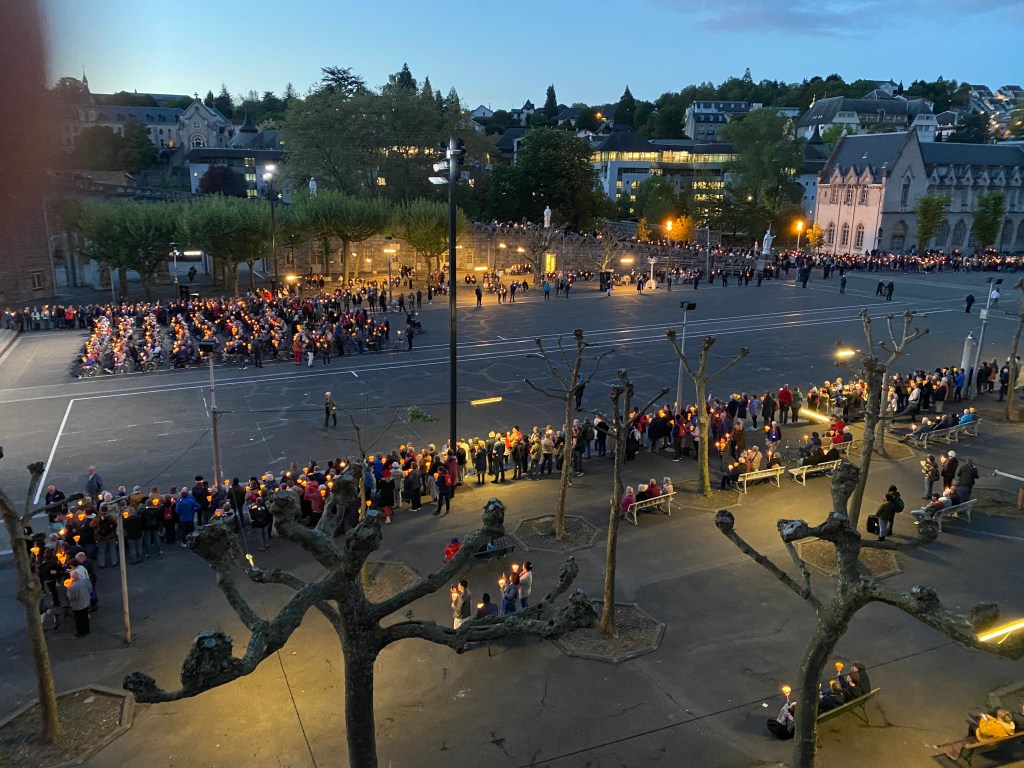
The pilgrims parade through the town and around the square before gathering in front of the Cathedral.
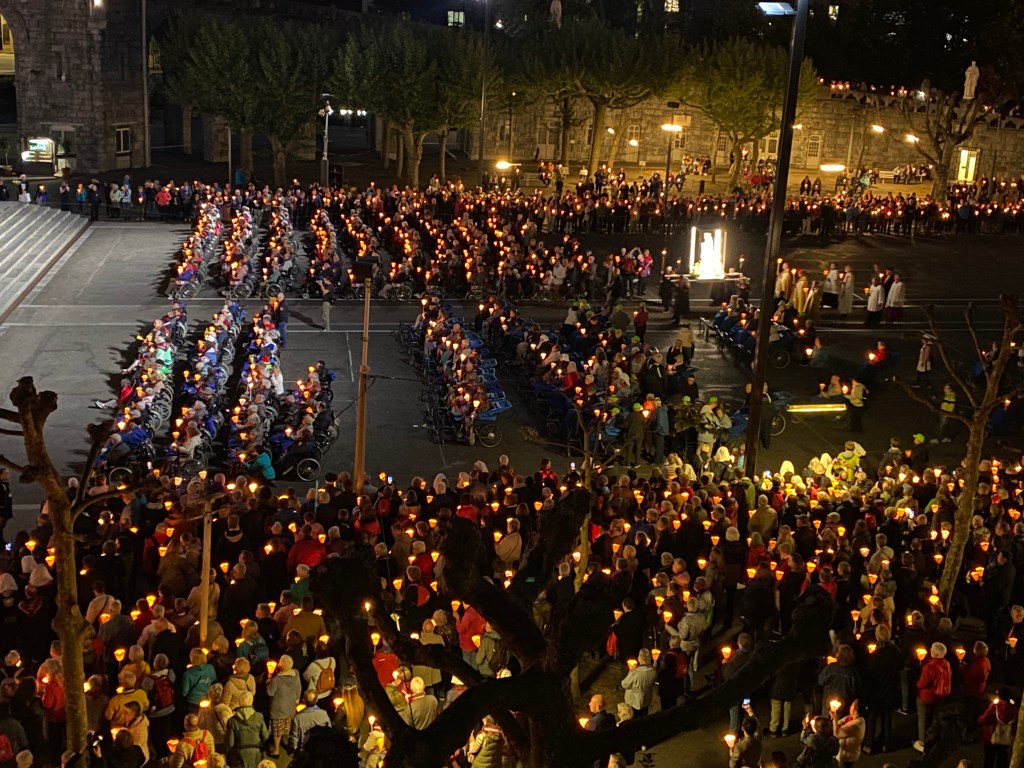
The area in the front of the courtyard is reserved for the invalids in wheelchairs. We estimated about 300 in wheelchairs and about 10,000 in the crowd.

The service takes almost two hours and includes an Adoration of the Blessed Mary as well as a Blessing of the Sick.
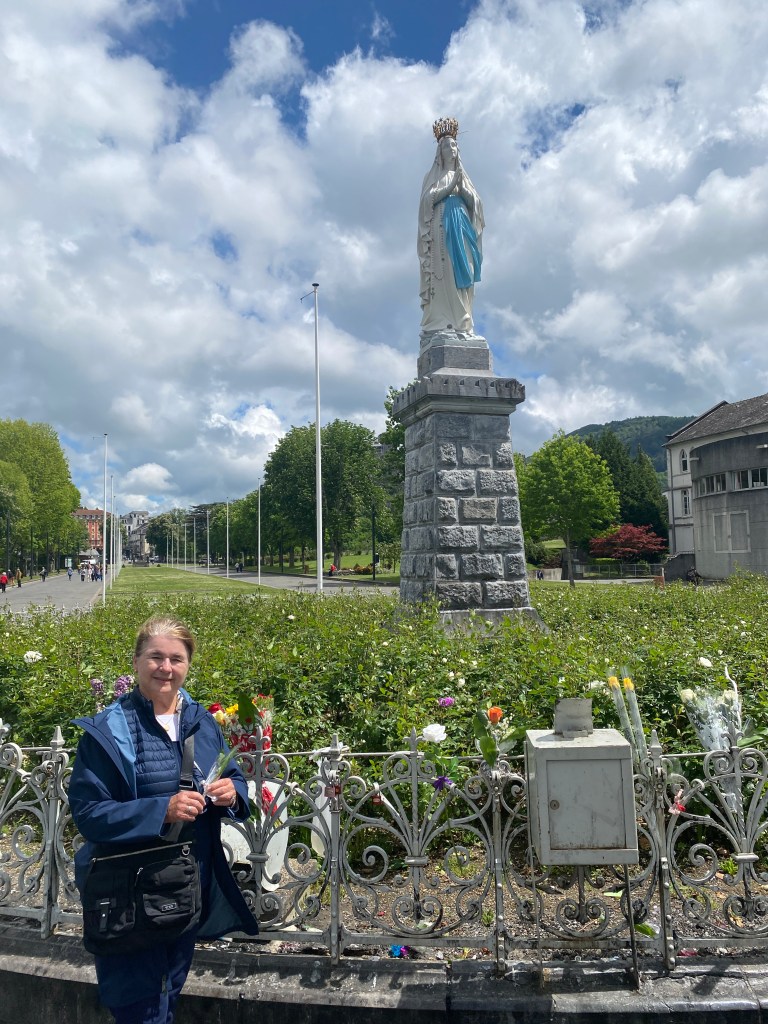
Linda and I left Lourdes heartened by the deep faith we witnessed during our visit and a prayer for peace in our world.
Risk vs Reward in Retirement Travel

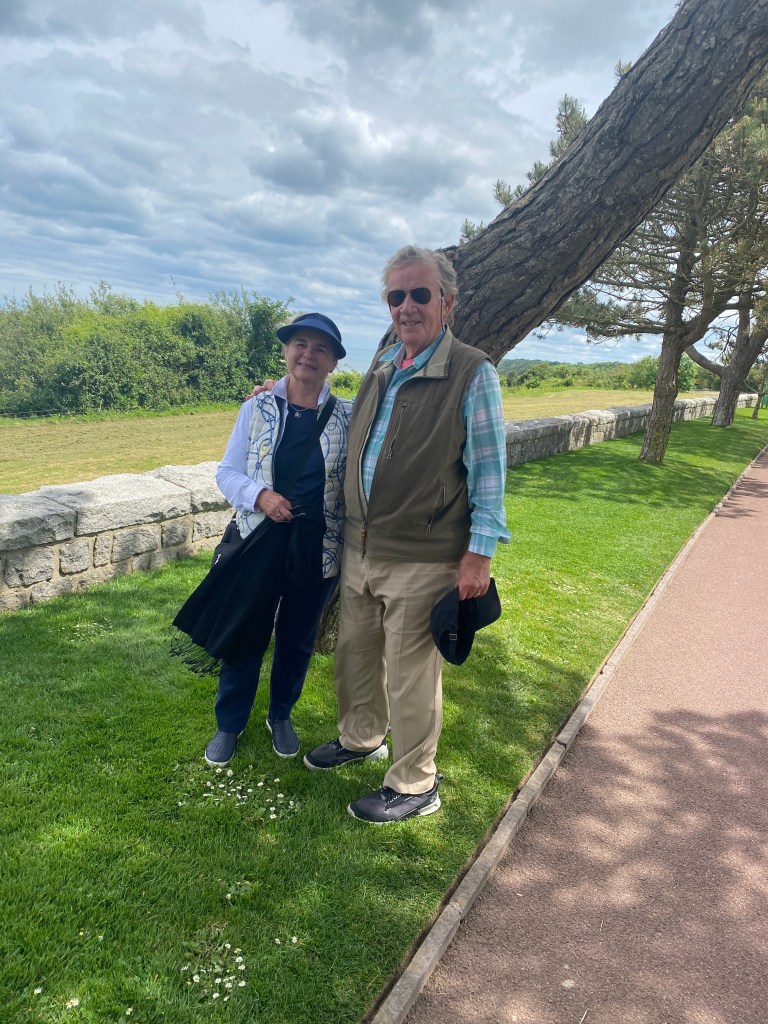
The American Cemetery at Normandy. Never photograph the grave markers. This was an easy visit from our Seabourn cruise in the North Atlantic.

Our first twenty years of retirement travel were filled with adventure with the belief that we were invincible, and we did not worry about hiking in the Amazon or walking on a glacier. We zip lined the treetops in Costa Rica with a glove for a brake and piloted our own boat from Tampa, Fl to Key West.

Now as we approach 80 years of age, and after several joint replacements, we are more aware of some risks.

We avoid third world countries with limited medical support. We rely on tours booked through our travel agent or the cruise ship. We seldom strike out on our own. We allow extra time at the airport, especially when making connections or clearing foreign immigration – no more running in the airport.

Every European city seems to have an “old town” with cobblestone streets and no handrails on the steps. No problem – we wear shoes with soles designed for wet surfaces and we keep a hiking stick strapped to our backpacks.

However, we still like to travel for at least thirty days at a time. This used to mean a Tauck tour in Spain, followed by a flight from Madrid to Istanbul, then a Seabourn cruise in the Greek Isles and a final few days in Athens. Or a Tauck Riverboat cruise during tulip season in the Netherlands, followed by a week in Paris and then a week in Barcelona.

Now are goal is one continuous trip without all of the connections. Seabourn cruise line offers extended cruises as their ships follow a long-term route as opposed to the back-and-forth routes of most cruise lines. For example, in 2023 we boarded Seabourn in Miami for a crossing to North Africa followed by three weeks in the Mediterranean. We did disembark in Venice for one week to allow a pilgrimage to Lourdes, France, before returning home.

So, we are not slowing down, but we are ensuring our travel decisions reflect our ages. This year we have completed a 21-day cruise in North Atlantic, a week in Maui and our fourth time on the Kentucky Bourbon Trail. The Trail trip is a good example of our change in travel decisions. Prior years we rented a car and drove for a week – with a different BnB every night. This year we stayed in two locations and hired a driver and van to be our “designated driver”.

A physical therapist recently told me that I am doing great, but that I need to remember that I am almost 78 and not 55.

Retirement Goals and Volunteering: A Vietnam Veteran’s Journey

After over forty years in the home building industry, I retired at the age of 57. I loved creating neighborhoods – especially for the first time buyer. A single-family home is still the American Dream, and I enjoyed being part of that dream.

Retirement came because of the pending financial crisis and my recognition it takes ten years for the industry to fully recover. I won’t delve into the politics of what caused the crisis – the government approving loans for buyers who did not qualify or the banks who took advantage of the programs. I have first-hand experience watching what home ownership provided for some of our underserved families.

But I found myself adrift after forty years of being focused solely on my career. I had one hobby – fishing – and I owned a boat.

I created a list of my goals in retirement: earn my Coast Guard Captain’s License, learn to play golf, take extended cruises on our boat, travel the world, and make a difference through a volunteer commitment to a local charity.

The most challenging of these plans was selecting a charity. As a Vietnam Veteran, I am very interested in helping the homeless – especially veterans. I spent several years working in a local food bank and then moved on to a homeless shelter.

I learned that there is very little that separated me from many of these clients. I met veterans with advanced degrees who had turned to alcohol during periods of stress. The common element was that they did not have a support system. I was blessed be my wife of 55 years who was there for my when I returned from Vietnam and supported me throughout my career.

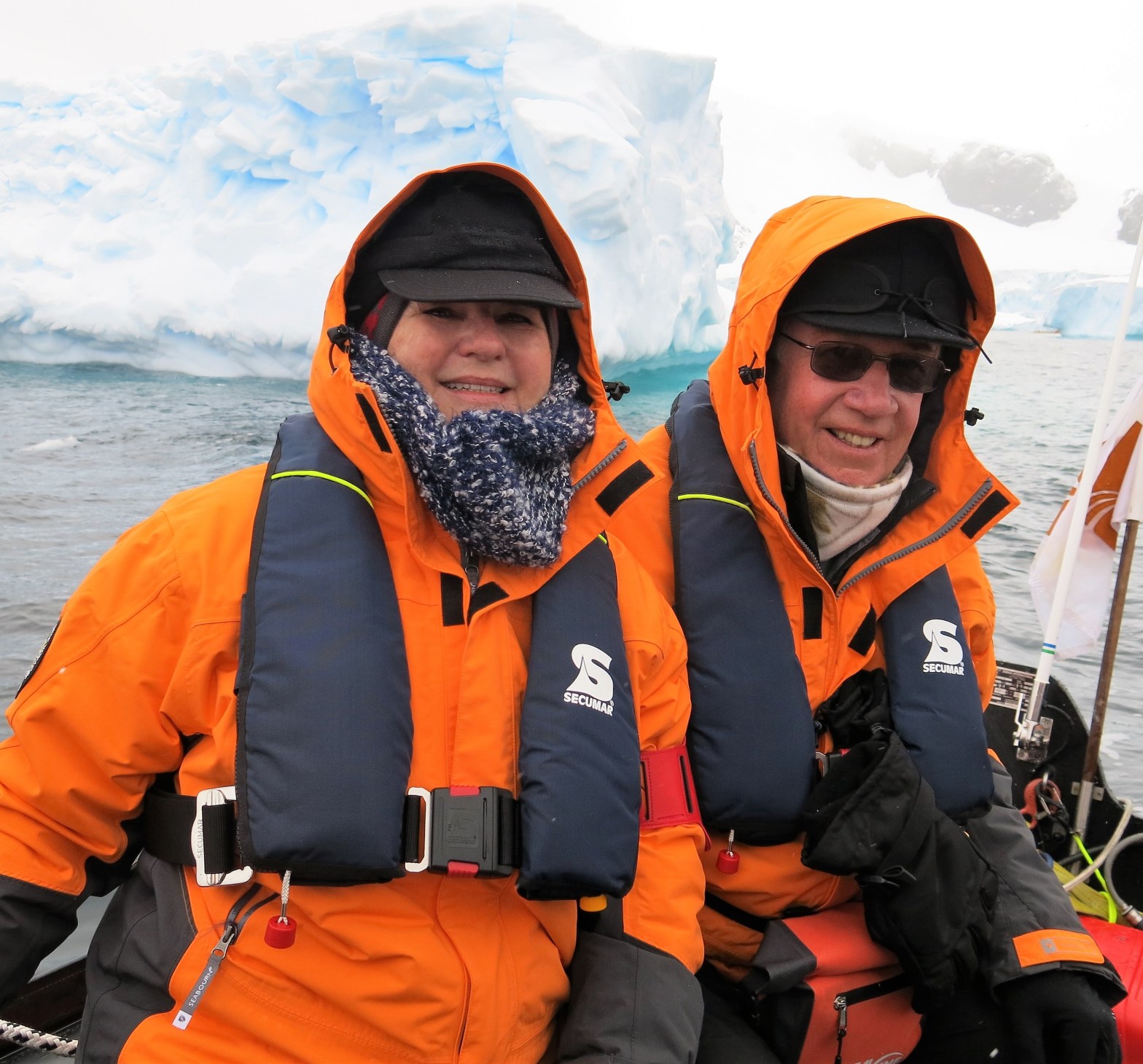
Twenty years later we have accomplished everything on my list. Now we are in phase two of retirement. I call this phase “risk vs. reward”. In the first twenty years we took manageable risks – the Amazon, Antartica, Greenland, etc.

This blog will be dedicated to continuing to find rewards in retirement, while balancing some of the challenges brought on by age.